
Humanities 人文
Explore how the Humanities Department builds critical thinkers through inquiry-based learning, field trips, and competitions in History, Geography, and Social Studies.
Humanities 人文
Developing Critical Thinkers and Global Citizens
At Maris Stella High School, the Humanities Department develops students to be critical and independent thinkers who understand the complexity of our interconnected world. We teach History, Geography, and Social Studies using an inquiry-based approach where students actively investigate real questions rather than passively absorbing information. Our students learn to think like historians and geographers—asking probing questions, gathering and evaluating evidence, and forming reasoned conclusions based on analysis.
What We Offer
Lower Secondary (Sec 1–3): All students study History and Geography, developing foundational content knowledge and inquiry skills through investigations designed around four stages: Sparking Curiosity, Gathering Data, Exercising Reasoning, and Reflective Thinking. At Secondary 3, students also take Social Studies, exploring contemporary issues affecting Singapore and the wider world.
Upper Secondary (Sec 3–4): Students choose from Pure History, Pure Geography, Elective History, Elective Geography, or Social Studies, allowing them to pursue their interests deeply. All students engage in extended Historical or Geographical Investigations where they frame their own research questions and produce evidence-based analyses.
How We Teach: Developing 21st Century Competencies
We actively build adaptive thinking, critical thinking, cognitive flexibility, and effective communication skills in every unit. Rather than treating these as separate from subject content, we weave them throughout our teaching.
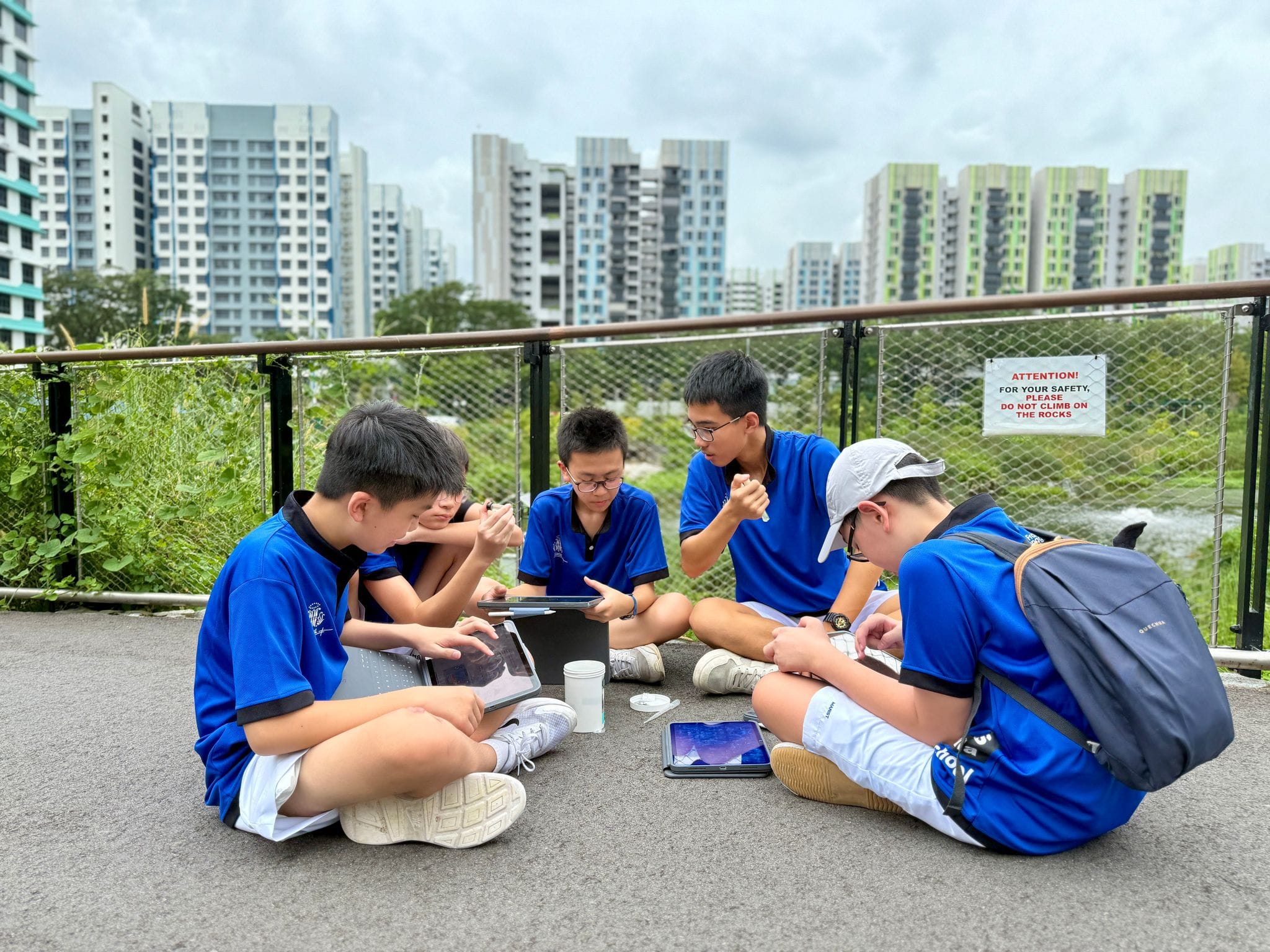
For example, in our Secondary 3 History War Machines investigation, students evaluate competing arguments about whether weapon quality or soldier skill mattered more in World War II success. They research sources, build scale models, and adapt their thinking as they encounter new evidence. In our Social Studies stereotype investigation, students examine issues from multiple perspectives, conduct interviews, and create evidence-based campaigns to promote social harmony. In Geography fieldwork, students collect real data on water quality or housing patterns and make genuine interpretive decisions about what their messy, real-world findings mean.
Developing Humanities Talents
Talent development is woven into our regular curriculum for all students through inquiry-based investigations that develop Humanities thinking skills. High-achieving students are stretched through Pure subjects, extension tasks, and independent research projects. We also offer enrichment through competitions (National Library History Scene Investigation, Model United Nations Conferences in both Chinese and English, NUS Geography and History Challenges), leadership roles such as student-led lessons and peer teaching, and learning journeys to places like NEWater, Parliament House, and heritage sites that deepen understanding of Singapore's achievements and challenges.
Supporting Every Learner
We recognise that every student learns differently. Students who find concepts challenging receive early intervention in small groups with individualised feedback. High-ability learners receive targeted enrichment and extension. All students receive formative feedback in four areas: task (how well you tackled the assignment), process (how you approached the research), self-regulation (how you monitor your own learning), and personal (recognition of your effort and growth).
Our Commitment
We measure success by more than grades—by whether our students are developing into critical thinkers who evaluate information, consider diverse perspectives, and make evidence-based decisions. We track whether they are developing 21st century competencies that will serve them in university and careers, and whether they are becoming thoughtful citizens who appreciate complexity, value diversity, and understand their responsibility to their communities and the environment that they are part of.
For more information, please contact the Humanities Department.